
From the CellSonic archives
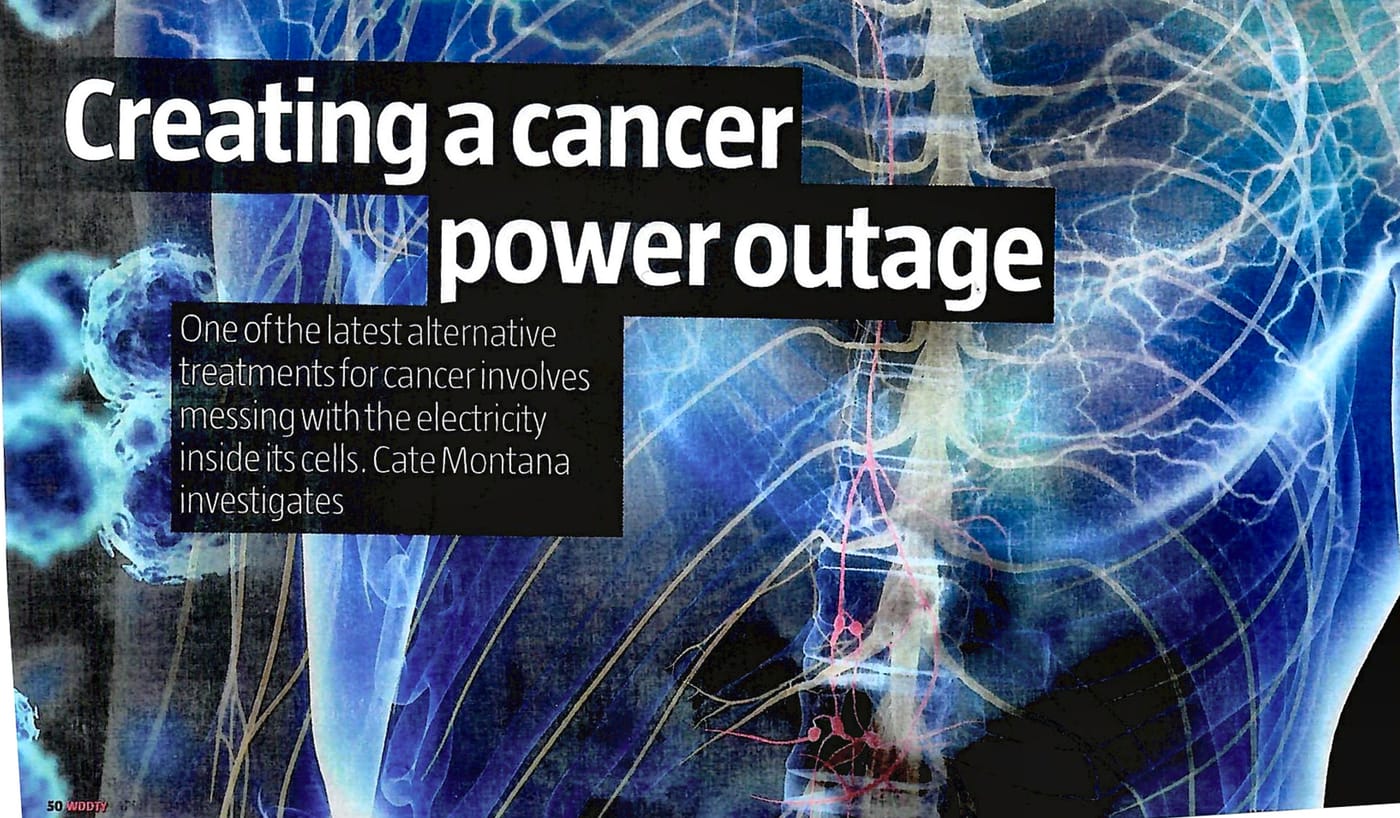
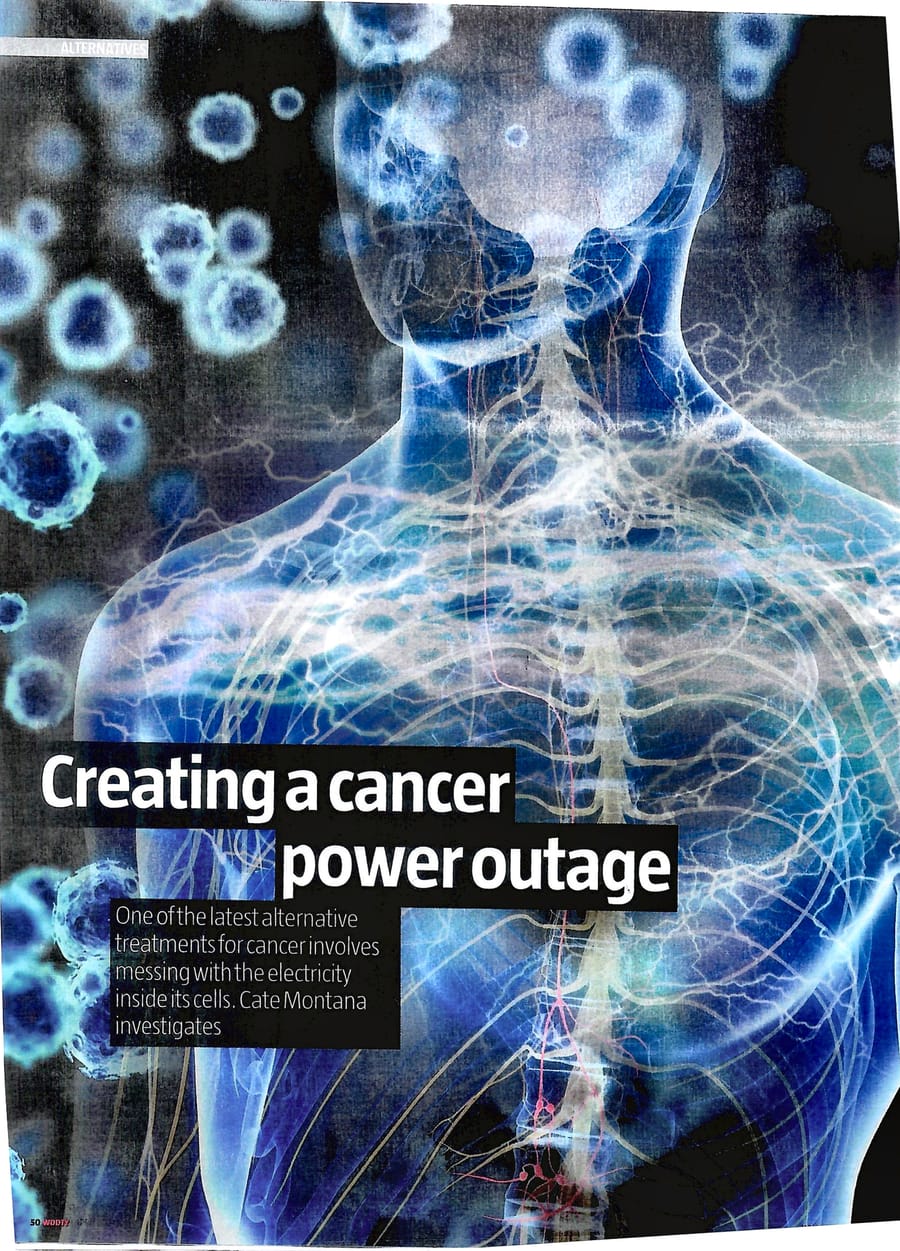
In April 2021, the health magazine What Doctors Don't Tell You (WDDTY) published a six-page investigation by journalist Cate Montana titled "Creating a cancer power outage". It looked at how CellSonic VIPP works on the electricity inside cells, and at the patients and practitioners who had already seen results.
We are republishing it because it shows that the ideas behind CellSonic are not new. Long before "bioelectric medicine" became a talking point, Professor Andrew Hague was arguing that cancer and chronic disease come down to cell voltage. He was also building, testing and refining the device to act on it, with the case histories to show for it.
"If physics and not chemistry was the required subject for medical students beginning their training, the world of medicine would be completely different."
— Andrew Hague, President, CellSonic Ltd. (WDDTY, April 2021)
A physics-first view of the body
The article opens with Andrew's central argument: medicine leans almost entirely on biochemistry (drugs) and mechanics (surgery), while ignoring the body's electrical side. Yet the body is clearly electrical. Every cell works like a small battery, and the voltage across its membrane decides whether it is healthy.
WDDTY set out the numbers. A healthy cell's membrane sits at around -60 to -100 millivolts. A cancer cell measures just -15 mV, about the same as a healthy cell in the middle of dividing. Researchers first classified cancers by their electrical properties as far back as 1926. Even so, the electrical self-healing side of the body is still rarely considered when new treatments are developed. That gap is what CellSonic was built to fill.
Decades of groundwork
The article traces how Andrew got there. He started as an engineer making bicycle parts in the UK, became a medical device distributor, and then worked at Dornier, the German aircraft manufacturer behind the HM3. The HM3 was the first lithotripsy machine approved for breaking up kidney stones with shock waves.
At Dornier, Andrew saw the same pressure waves heal wounds that had resisted everything else. One case stayed with him: a woman from Holland, then in her nineties, whose wound had not healed since she was a teenager. It was healed with the shock wave device.
He then came across a hypothesis from doctors in Beijing that the pressure waves used to break kidney stones could also kill cancer. In WDDTY's words: "The Chinese doctors didn't know how, but Hague did." He founded CellSonic Ltd and kept redesigning lithotripsy devices until he arrived at the CellSonic VIPP (Very Intense Pressure Pulses).
The first cancer case
The first cancer patient to be treated with the VIPP was someone Andrew knew personally.
"Our distributor in Bangladesh knew me and trusted me. He had prostate cancer and asked me if I could do anything, and I thought 'Yes!'"
— Andrew Hague
In November 2016 the patient was admitted to a hospital in Mumbai for treatment with CellSonic VIPP under a physician's supervision. Bloodwork and scans showed the cancer had spread beyond the prostate. When he arrived he could hardly walk. He had one treatment on Monday and a second on Wednesday.
"That afternoon he and his wife went for a long walk around the Mumbai Zoo. Three weeks later they got all the scans and blood tests back, and he no longer had any cancer."
— Andrew Hague
What independent practitioners said
WDDTY also interviewed doctors at two established integrative cancer clinics who were already using the CellSonic VIPP.
"I think it's a very powerful tool... You don't build a house with one tool. I use a lot of different tools. But CellSonic is one of the big guns."
— Dr Andrew Dickens, NMD, Dayspring Cancer Clinic, Scottsdale, Arizona
"I think it's a good supportive device that restores the bioelectrical charge of the cells from an unhealthy to a healthy level."
— Dr Lloyd Jenkins, Budwig Center, Málaga, Spain
Dr Jenkins described two patients whose cancer markers were tested before and after treatment:
- "Anna" came to the clinic in February 2020. After a few CellSonic sessions, her levels of a cancer marker fell by nearly half.
- "Liliana" from Italy arrived with stage II breast cancer. After a two-week course of CellSonic treatment, a marker test at a nearby city found no cancer activity. The tumour was then removed by lumpectomy, and Dr Jenkins reported she was "doing very well."
"They couldn't find any cancer activity."
— Dr Lloyd Jenkins, on Liliana's results
Both clinics used CellSonic as one part of a wider programme alongside diet, detox, supplements and emotional support. Dr Jenkins called it "a very helpful tool in the clinic," while stressing that no single device works as a "magic bullet." CellSonic has always taken the same view: the VIPP restores the cell's voltage, and the body does the healing.
Don's story
The article ends with Don Skelton from Gloucestershire. Don was diagnosed with early-stage prostate cancer in 2008. Over the following years he went through watchful waiting, hormone therapy he describes as "just awful," and hyperthermia in Germany, while his PSA level kept climbing.
After seeing Andrew interviewed on television, Don emailed him the same day. Andrew phoned him back and referred him to a practitioner in London, where he was treated with CellSonic VIPP alongside oxygen and hydrogen therapy. Since then, he told WDDTY, he hadn't had any major problems.
"All of the stuff that I've read about the electrical field dynamic makes sense."
— Don Skelton, CellSonic patient
Why this matters today
Andrew Hague was making the case for bioelectric medicine years before the 2021 WDDTY feature, and the same case runs through everything CellSonic does today: restore the cell's voltage and the body can repair itself. The cases reported in that article are part of a track record with cancer and chronic disease that has kept growing since.
Read the full original article from the April 2021 issue of WDDTY: Creating a cancer power outage (PDF).
Explore more oncology case studies in our library, or learn how the technology works.
CellSonic VIPP is not approved as a cancer treatment in every country, including the United States. Speak to a qualified practitioner about any treatment decision.
